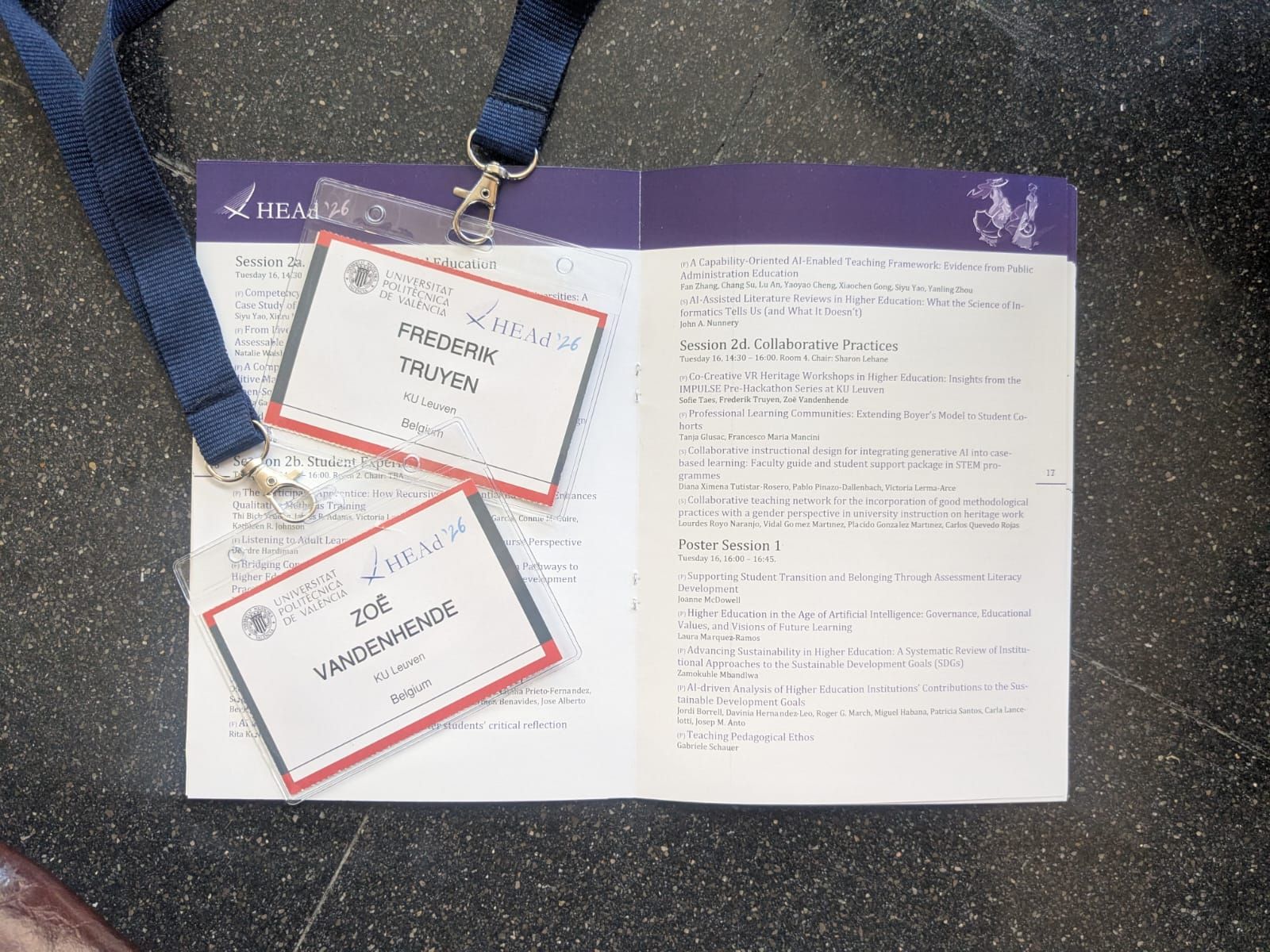
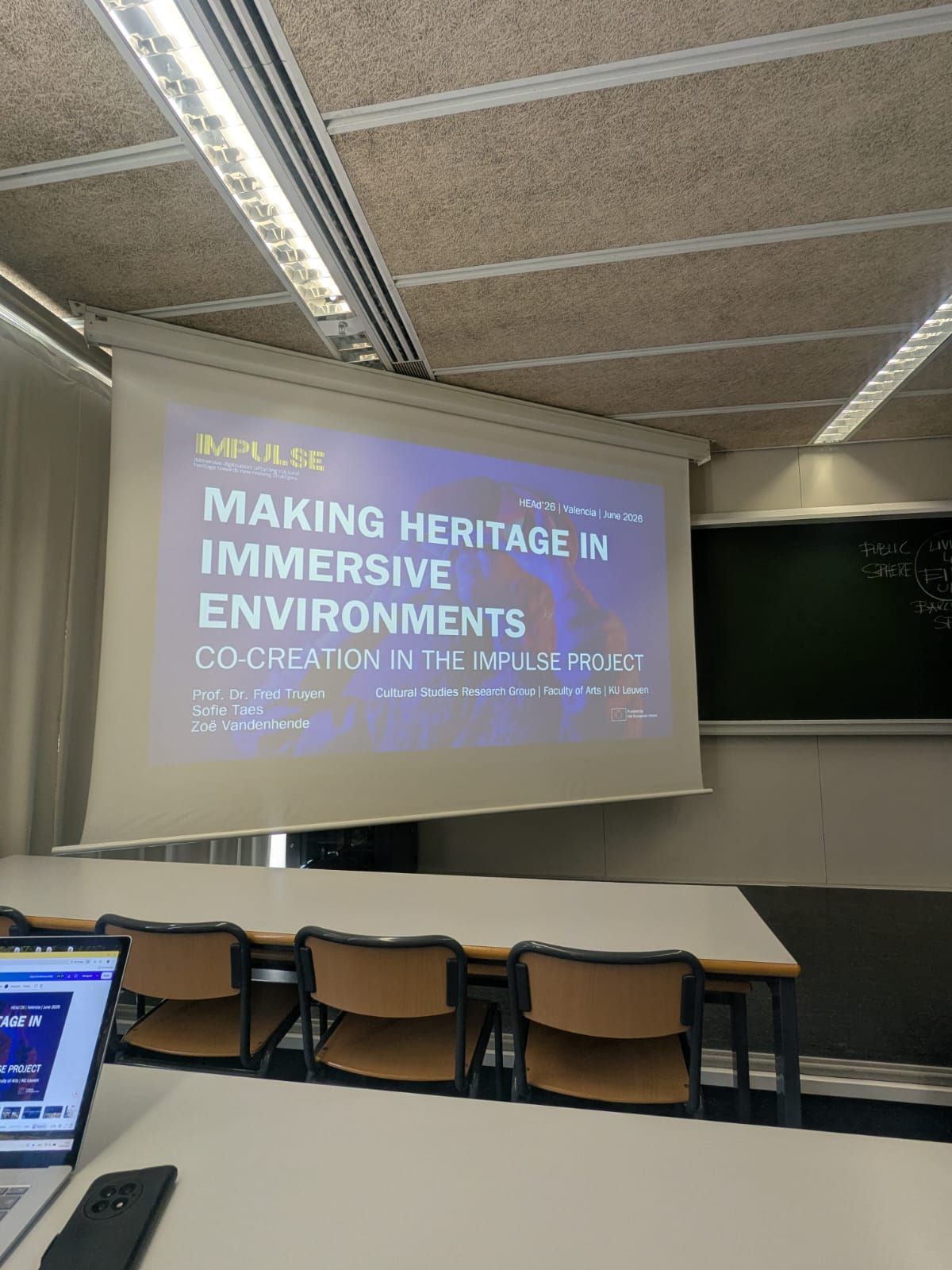
At the HEAd’26 Conference in Valencia (June 16-18, 2026), Zoë Vandenhende and Frederik Truyen (KU Leuven) presented key insights and experiences generated through the IMPULSE project, showcasing how immersive environments can transform heritage education and engagement.
Drawing on a series of activities conducted throughout the project, including the February 2025 pre-hackathon, the December 2025 workshop with heritage students, the May 2026 workshop series, and the Athens hackathon, the presentation highlighted how participants interact with cultural heritage within multi-user virtual environments (MUVEs).
A central finding was the accessibility of the immersive platform. Participants from diverse backgrounds, ranging from heritage scholars and design students to computer science students, were able to engage confidently with the environment from the outset. Rather than focusing on the technology itself, participants quickly shifted their attention to interpretation, storytelling, and critical reflection.
Across all activities, important discussions emerged organically around themes such as representation, positionality, institutional power, and whose voices are included in heritage narratives. Notably, these conversations arose without facilitator prompting, even among participants with little prior knowledge of heritage studies, demonstrating the capacity of immersive environments to stimulate critical thinking and meaningful dialogue.